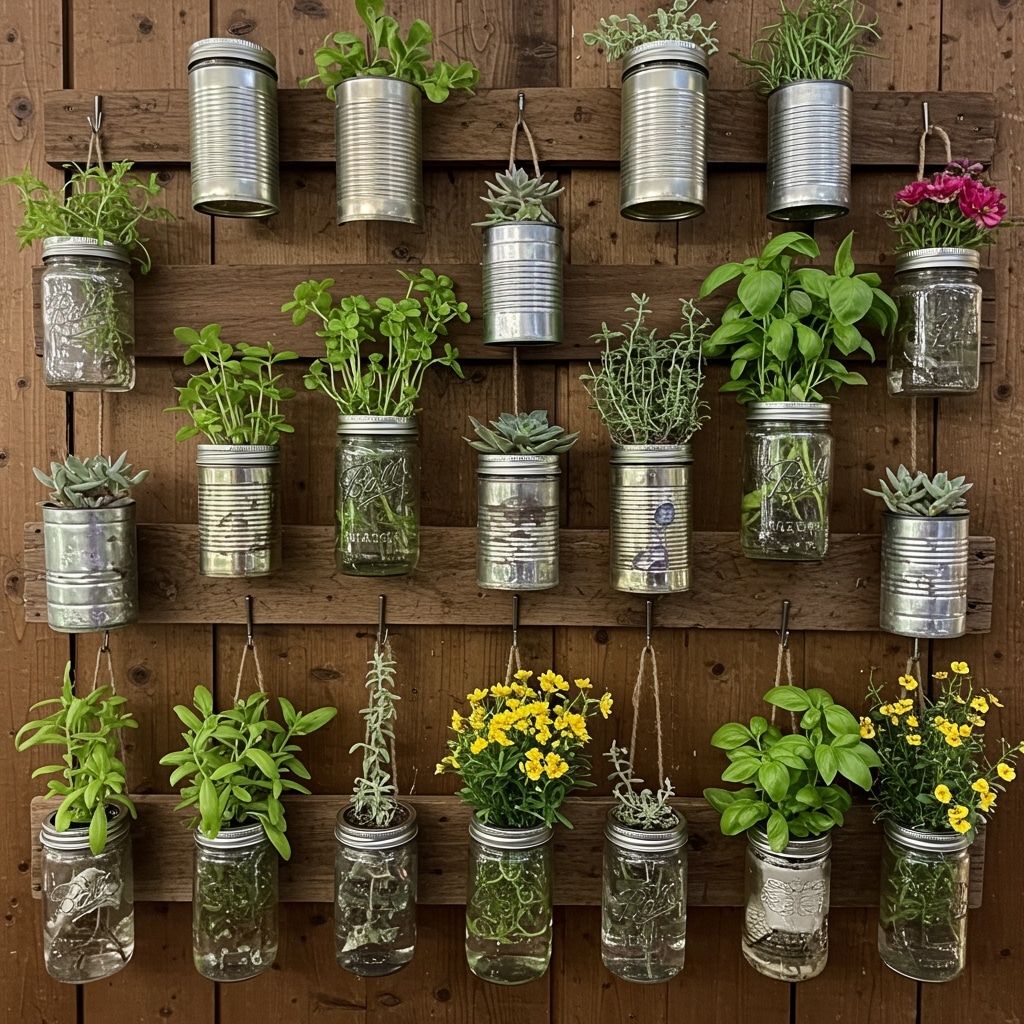
If you’re looking for a simple and stylish way to add greenery indoors or outdoors, mason jars and tin cans make excellent planters. These everyday items are easy to repurpose, budget-friendly, and versatile enough for both herbs and decorative plants.
Mason jars bring a rustic charm to kitchens and living rooms, while tin cans add an industrial, upcycled touch to balconies and patios. With a few tools and a bit of creativity, you can mount them on walls, shelves, or boards to create a compact vertical garden.
🌿 This idea is also part of our main guide: 15 Creative DIY Vertical Garden Ideas Using Recycled Materials.
Materials & Tools You’ll Need
Both mason jars and tin cans are easy to source and adapt into vertical planters. Here’s what you’ll need:
Materials:
- Mason jars (any size, but medium jars work best for herbs)
- Tin cans (soup cans, coffee cans, or similar)
- Potting soil (light, well-draining mix)
- Pebbles or small stones (for drainage layer)
- Seeds or seedlings (herbs, succulents, or flowers)
- Wooden board, shelf, or pallet (for mounting)
- Hose clamps, screws, or strong hooks (to secure jars/cans)
Tools:
- Drill (to make holes in cans or secure clamps)
- Hammer and nails or screwdriver
- Scissors (for cutting fabric liners if needed)
- Paint or spray paint (optional, for decorating cans)
- Sandpaper (to smooth sharp can edges)
💡 Tip: To make cans safer, always sand or fold sharp edges after cutting, and use food-safe jars or containers for growing edibles.
Step-by-Step Instructions
Here’s how to set up a vertical garden using mason jars and tin cans.
For Mason Jars
- Prepare the Jars
- Wash jars thoroughly.
- Place a small layer of pebbles at the bottom for drainage.
- Mounting
- Attach hose clamps to a wooden board or wall.
- Insert jars into the clamps and tighten securely.
- Planting
- Fill jars with potting mix.
- Add herbs, succulents, or air plants.
- Place the board vertically on a wall or shelf.
For Tin Cans
- Prepare the Cans
- Wash and remove labels.
- Drill 3–4 drainage holes in the base.
- Sand any sharp edges.
- Decorating (Optional)
- Paint cans with bright colors or rustic metallic spray.
- Wrap with jute rope for a natural look.
- Mounting
- Screw cans directly onto a wooden board, pallet, or fence.
- Alternatively, hang them with hooks or rope.
- Planting
- Add soil and insert seedlings.
- Water lightly and let excess drain out.
💡 For indoor setups, use a tray or saucer beneath jars and cans to catch extra water.
Best Design Variations
Both mason jars and tin cans are incredibly flexible for creative vertical garden setups. Here are some popular styles:
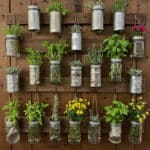
1. Wall-Mounted Herb Garden
- Mason jars or cans are secured to a wooden board and mounted on a kitchen or balcony wall.
- Perfect for fresh cooking herbs like basil, thyme, and parsley.
2. Hanging Mason Jar Planters
- Jars suspended from hooks or rope, creating a floating vertical garden.
- Great for trailing plants like ivy or pothos.
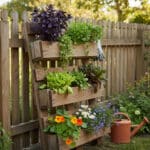
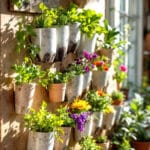
3. Painted Tin Can Display
- Brightly painted cans attached in rows on a fence or pallet.
- Adds color and charm to outdoor spaces.
4. Mixed Jars & Cans
- Combine mason jars and tin cans on the same board for a rustic-industrial style.
- Works well indoors as wall décor or outdoors for compact gardens.
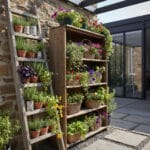
5. Shelf Garden with Recycled Containers
- Place jars and cans on tiered shelves or old racks.
- Allows easy rearranging and adds depth to a vertical layout.
💡 For even more variety, pair jar and can gardens with ladder planters or crate gardens to create a layered vertical garden wall.
Best Plants to Grow in Mason Jars & Tin Cans
Because jars and cans have limited space, choose compact plants that thrive in shallow soil.
Herbs 🌱
- Basil, thyme, parsley, cilantro – grow easily in small containers.
- Mint – vigorous growth but controlled in a can or jar.
- Chives – low-maintenance and perfect for kitchen windows.
Leafy Greens 🥬
- Lettuce, arugula, spinach – grow well in wide cans with good drainage.
- Microgreens – ideal for jars since they need very little soil.
Decorative Plants 🌸
- Succulents & cacti – require minimal soil and water.
- Air plants (Tillandsia) – thrive without soil, perfect for mason jars.
- Small flowering plants like pansies or marigolds for color.
Trailing Plants 🌿
- Ivy, pothos, spider plants – look stunning in hanging jars or cans.
💡 Tip: Mix edible herbs with decorative succulents for a vertical garden that’s both practical and stylish.
Care & Maintenance Tips
Mason jars and tin cans are easy to maintain, but they do require some special attention to keep plants healthy.
1. Watering
- Mason jars: since they lack drainage holes, add a pebble layer at the bottom and water sparingly.
- Tin cans: drainage holes at the base prevent root rot, but always water slowly to avoid overflow.
2. Sunlight
- Place jars and cans near a bright window or on a sunny balcony.
- Herbs and leafy greens need 4–6 hours of light daily, while succulents need even more.
3. Fertilizing
- Add diluted liquid fertilizer every 2–3 weeks to replenish nutrients.
- For jars, be extra careful—nutrient buildup is more common without drainage.
4. Cleaning & Longevity
- Mason jars can develop mineral buildup over time—wipe with vinegar occasionally.
- Tin cans may rust outdoors—coat with a thin layer of clear varnish or use stainless steel options.
5. Rotating Plants
- Switch out quick growers like lettuce and basil regularly.
- Mix long-lasting succulents or flowers to keep your garden attractive year-round.
💡 For durability, combine mason jars indoors and tin cans outdoors to balance style and weather resistance.
Common Mistakes to Avoid
While mason jar and tin can gardens are simple, a few errors can affect plant health or container durability.
1. Overwatering Mason Jars
- Since jars don’t have drainage holes, excess water can suffocate roots.
- Always add pebbles at the bottom and water lightly.
2. Forgetting Drainage in Tin Cans
- Without drilled holes, water collects at the bottom and causes root rot.
- Drill at least 3–4 small holes per can before planting.
3. Using Unsafe or Rusty Cans
- Avoid cans that stored chemicals or are heavily rusted.
- Stick to food-safe, stainless, or freshly cleaned cans.
4. Growing Large or Deep-Rooted Plants
- Mason jars and cans don’t provide enough soil depth for crops like carrots or large tomatoes.
- Stick to herbs, leafy greens, or compact ornamentals.
5. Ignoring Sunlight Requirements
- Herbs and greens need consistent light.
- Place indoors near a sunny window or use grow lights if natural light is limited.
💡 For bigger crops, try combining tin cans with pallet gardens or crate planters for deeper soil options.
Creating a vertical garden with mason jars and tin cans is one of the simplest and most stylish ways to add greenery to your home. These containers are easy to repurpose, inexpensive, and versatile enough for both edible herbs and decorative plants.
By experimenting with designs—whether wall-mounted boards, painted cans, or hanging jars—you can transform small spaces into thriving mini-gardens. Not only does this approach recycle everyday items, but it also adds a rustic-industrial charm to kitchens, balconies, and patios.
🌱 This project is featured in our complete guide: 15 Creative DIY Vertical Garden Ideas Using Recycled Materials. Explore it for even more creative, eco-friendly designs.